




September 2024
Villa Petriolo
A Contemporary Renaissance modelled on historical regenerative agriculture
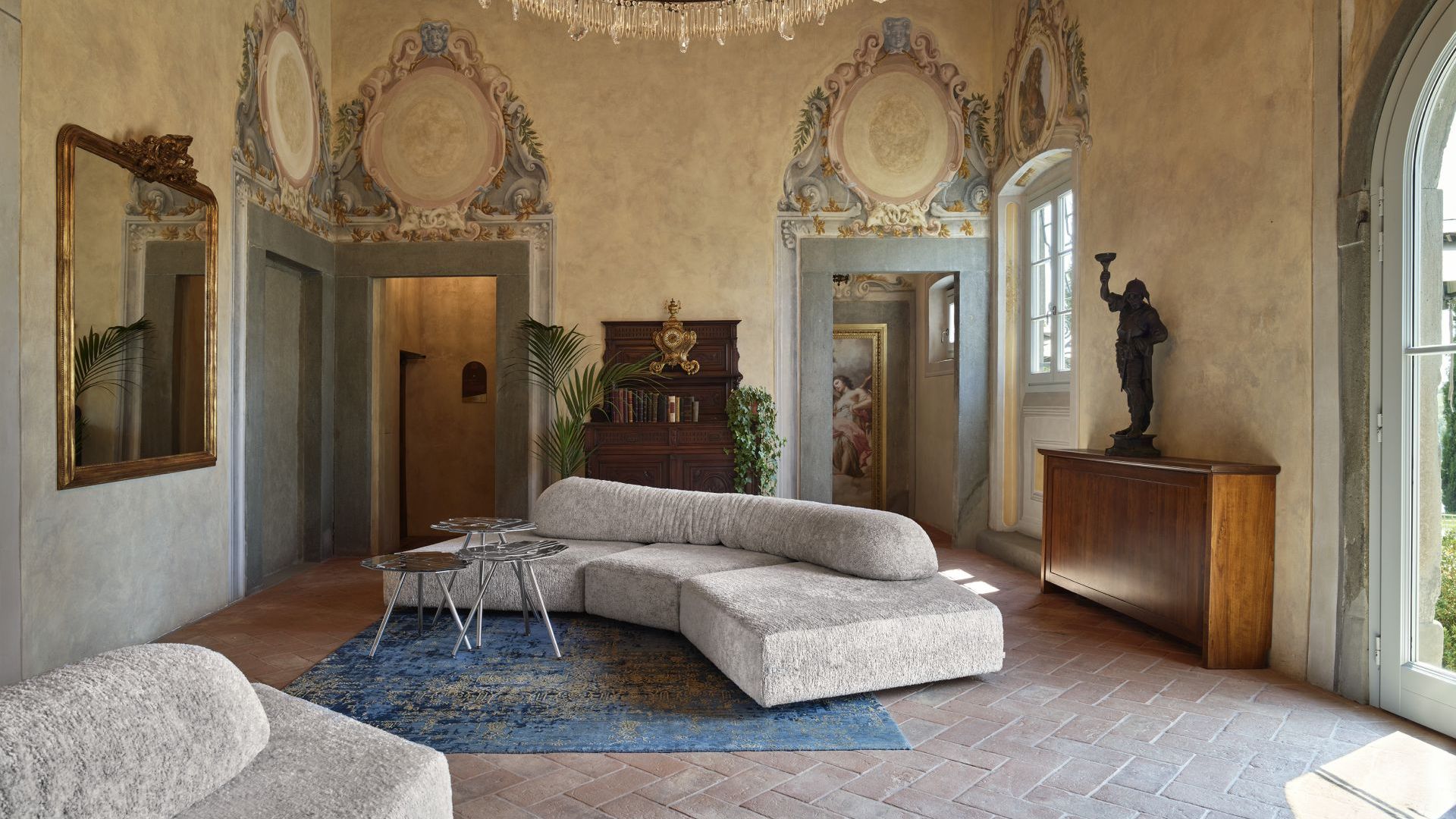
Interviewed by Alessandra Lanza for Abitare, in the issue of 3 March 2017, Andrea Branzi stated: “There is not a lot of difference today between past, present and future. There is a somewhat circular, fluid time, so that I wouldn't say memories of the past remain, but certainly, stimulations coming from very remote times". His words are a perfect premise to the unique story of Villa Petriolo, a story of looking at our origins in order to imagine a better future. A philosophy that has made it possible for Daniele Nannetti and his far-sighted partners, Mexican spouses Maria Elena and Hector Cuadra, to create a place dedicated to hospitality, that reflects centuries of history. The extensive property is immersed in the Tuscan countryside of Cerreto Guidi, not far from Florence, in a villa-farm system that has its origins in the sixteenth century. General director Daniele Nannetti recounts, “When we discovered the villa, in its abandoned state, we realised how important it was to discover why it had been established. In those past centuries there was a high level of knowledge and skill in agriculture and sustainable living. A Contemporary Renaissance modelled on regenerative agriculture was precisely what we had imagined".
The aim is to generate a model of hospitality offering visitors the Tuscan experience in its wholeness, recounting the essence of a territory which in addition to artistic beauty, dolce vita and Italian gardens, features agriculture as an essential component of 'tuscanity'. The operation has significant environmental and economic value, and a dimension of critical history, since by dwelling on popular culture it adds a missing piece to the mosaic of the official narrative of made-in-Italy offered to tourists. “The word 'agriculture' contains within it the term 'culture', and in our opinion, what was missing was a history of Tuscany that re-evaluates the impact of agricultural and peasant culture on the development of the arts, architecture and food. If Michelangelo and Leonardo da Vinci existed then it is because generations of excellent farmers, in a balanced and loving relationship with nature, knew what was necessary to give and receive to make this land thrive. The Renaissance was possible thanks to an economic surplus, and this was generated by a significant and cultured management of the countryside, spurred not only by a love of products, but a love of beauty, the imprint of human beings on the landscape. If Tuscany is famous around the world for its landscapes that is because six hundred years ago farmers, with no training as we understand it today, were moved by a deep-rooted sense of aesthetics, understanding that biodiversity is not only good for products, but for our eyes. This is the reason we have tried to create a project that is 100% Tuscan, tying everything together, from farm, to restored frescoes, artworks and furnishings: to transmit the importance of this message, that speaks of sustainability and respect for the culture and community that we are part of." The choice of furnishing some of the rooms with Edra acts on this principle, underlining a desire to offer narratives of Tuscan excellence that touch different areas, and considering sustainability as the ability to self-sustain, but also to last over time. Francesco Binfaré's On the Rocks sofas welcome guests to the entrance hall of the main villa and, together with Jacopo Foggini's Margherita armchair and Cicladi tables, to the first floor lounge of a renovated farmhouse sitting beside a wellness centre. Perhaps the most curious aspect of Villa Petriolo's history is that, from the point of view of running it, the secret to realising this dream was hidden in the business plans of an enlightened and wealthy family of the sixteenth-century. Indeed the villa-farm was born at a time when, to escape the city's insalubrious conditions, Florentine nobles spent long periods of time in the countryside with relatives, friends and acquaintances. These villas were highly expensive to maintain, cathedrals in the desert, and aware that the role they had had in the past could not be maintained, owners devised a system that would sustain itself. These new ideas did not forego beauty and luxury but re-stated them in a sustainable way. Villa Petriolo, surrounded by a large farm productive year-round, could accommodate hundreds of people, and had three hundred farmers who when guests arrived, were transformed into waiters, cooks and washerwomen to satisfy the family's needs. “Simply speaking they invented a new form of hospitality, open to family and friends, rather than tourists, but nothing less than a modern, sustainable luxury resort. What we are doing today is exactly what they did then. We still use the old practices of regenerative agriculture, combining them with cutting-edge technology and excellent service to achieve high standards of sustainability and quality. But the principle is identical. Extremely precise data has emerged from historical research on what was produced, and the quantities. We used this information as a starting point. Today we produce honey, meat, milk, cereals and fruit. We have a botanical garden for medicinal herbs, a reserve for hunting and much more. We are not entirely self-sufficient but have a very high level, and what we can't produce ourselves we always buy locally". The estate has been given Monument and Landscape status by Italy's Superintendent of Cultural Heritage. It has been rescued, restored and brought back to its original layout. True luxury lies in stimulating the senses, offering all-round wellbeing, the possibility of authentic experiences beyond the scope of a seasonal resort. Extending for 170 hectares of rich biodiversity, with woods, vineyards, farmed fields and open-air livestock farms, the estate is made up of historic buildings, still with their heritage of artistic decorations, old terracotta and stone floors, ceilings with ancient wooden beams, and recycled materials used during the restoration. Elements of the old building impossible to keep in place have been recycled into furniture and architectural details. Everything has been carried out with extreme care, and respect for the "Genius Loci", the genius of the place. Villa Petriolo's luxury has nothing to do with a stereotype, but the highest non- reproducible quality of a 100% Tuscan experience. Guests sleep in elegant rooms and suites equipped with all the comforts, each with its own character. However they are all connected with the outdoors and animals living on the estate. They relax in a modern spa. Non-staying guests can eat and drink here too, choosing from the excellent menus of the PS Risorante, the Petriolo bistro-shop and Golpaja tavern. The table is Tuscan: this is not the place for champagne-tasting or drinking Venetian prosecco. The large On the Rocks sofa speaks of know how made in Tuscany, of a love for these landscapes, and a new idea of comfort that does away with the formal to offer individual pleasure. “We imagined a very domestic environment, forgoing conventional kinds of luxury you might define as 'white glove'. We seek to eliminate the distances between people, and make them feel at ease in a natural way. On the Rocks conveys this sense of liberty and elegance. If I had to say in a word what guides our work, I would say the search for equilibrium, for balance. Sustainability is synonymous with balance. Everything in the world is founded on an equilibrium: the laws of thermodynamics, the universe, walking itself is an exercise in balance. Villa Petriolo is governed by the perfect balance of elements: guests and staff, architecture and nature".


